
Many people believe that lower back pain means you should stop exercising completely and keep your back still until the pain goes away.
That is not always the best approach.
For many people with uncomplicated low back pain, staying active and gradually returning to movement can be helpful. The important part is choosing exercises that match your symptoms, fitness level, and physical ability instead of forcing your body through painful movements.
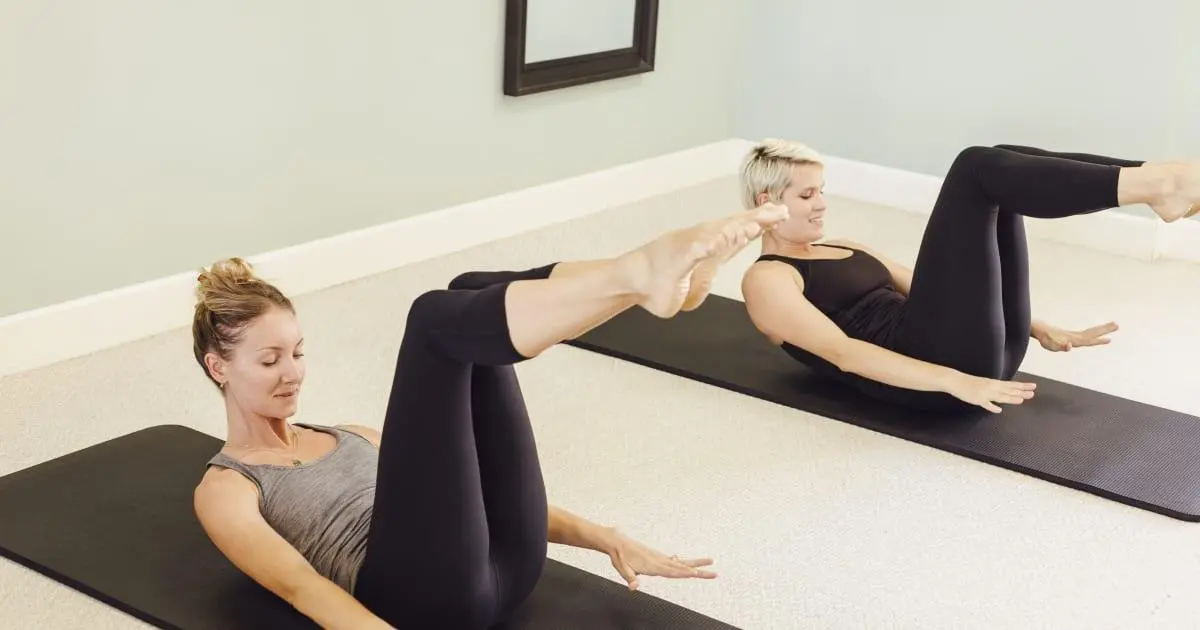
This is one reason Pilates for lower back pain has become a popular exercise option. Pilates uses controlled movements that can be modified for different ability levels. It may help improve strength, mobility, coordination, and confidence with movement.
Research suggests that Pilates can help reduce low back pain compared with no exercise. However, it should not be presented as a guaranteed cure or as the only effective form of exercise.
If you are searching for Pilates exercises for lower back pain, this guide will explain how Pilates may help, which exercises are commonly used, and how beginners can approach them safely.
Why Does Lower Back Pain Make Movement Difficult?
Lower back pain can make simple daily activities uncomfortable.
You may notice pain or stiffness when:
- Sitting at a desk
- Standing for long periods
- Bending forward
- Getting out of bed
- Walking
- Climbing stairs
- Picking something up
- Exercising
When movement becomes painful, it is natural to become cautious.
You may start avoiding certain movements. You may also reduce your physical activity or spend more time resting.
While short-term rest may sometimes be useful, avoiding movement for too long can make it harder to rebuild strength and confidence.
Why Does Movement Feel Different When Your Back Hurts?
Your lower back does not work alone.
Everyday movements involve your:
- Spine
- Pelvis
- Hips
- Abdominal muscles
- Back muscles
- Glutes
- Legs
For example, picking something up from the floor requires your hips, knees, pelvis, and spine to work together.
If one area becomes painful or stiff, you may naturally change the way you move.
You might become more rigid. You may avoid bending. Or you may rely more heavily on other parts of your body.
Over time, this can reduce your confidence in normal movement.
That is why back pain rehabilitation is not simply about stretching the lower back.
It can also involve improving strength, mobility, coordination, and your ability to perform everyday activities.
Can Staying Still Make Back Pain Better?
Rest can feel comfortable when your back hurts.
However, complete inactivity is generally not the long-term goal for uncomplicated low back pain.
Appropriate physical activity can help you maintain strength and gradually return to your normal routine.
The type and amount of exercise should still match your symptoms.
This is especially important if you are considering Pilates exercises for lower back pain at home.
You do not need to start with difficult exercises. A suitable program can begin with simple movements and progress gradually.
Why Can Controlled Exercise Help?
Pilates focuses on controlled and deliberate movement rather than rushing through repetitions.
Depending on your needs, a Pilates program may include:
- Core strengthening exercises
- Trunk stability exercises
- Pelvic control
- Hip strengthening
- Spinal mobility exercises
- Balance exercises
- Coordination
- Flexibility work
- Controlled breathing
- Functional movement
These exercises can help you gradually build physical capacity.
Pilates has also been studied in people with chronic low back pain, including its effects on core muscle strength. Research suggests potential benefits, although studies have used different exercise programs and methods.
Lower Back Pain Can Affect Your Confidence
Back pain is not only about physical symptoms.
If you have experienced repeated episodes of back pain, you may become worried about:
- Bending
- Lifting
- Exercising
- Walking
- Returning to sports
- Performing household activities
This fear can make you less active.
A gradual exercise program can help you become more comfortable with movement again.
The goal is not to promise that your back will never hurt again.
Instead, the aim is to improve your strength, movement, and confidence so you can return to activities that matter to you.
Does Everyone With Lower Back Pain Need the Same Exercise?
No.
Lower back pain is a symptom, not one specific condition.
Some people have uncomplicated nonspecific low back pain. Others may have nerve-related symptoms or another underlying problem.
Because of this, there is no single best Pilates exercise for lower back pain that works for everyone.
An exercise that feels comfortable for one person may irritate another person’s symptoms.
Your exercise program should therefore be based on your symptoms, ability, and tolerance.
What Causes Lower Back Pain?
There are many possible reasons for lower back pain.
Sometimes symptoms begin after lifting something heavy or increasing physical activity.
In other cases, the pain develops gradually without an obvious cause.
Let’s look at some common factors.
Muscle or Soft-Tissue Strain
A sudden increase in exercise or physical activity can place extra stress on your muscles and surrounding tissues.
This may result in:
- Aching
- Tenderness
- Stiffness
- Reduced movement
- Difficulty exercising
Many uncomplicated episodes improve over time with appropriate activity and a gradual return to normal movement.
Prolonged Sitting and Low Physical Activity
Many people spend several hours sitting at work.
Sitting itself is not necessarily harmful. However, spending most of the day in one position while doing very little physical activity can contribute to stiffness and reduced movement.
Regular movement breaks can help.
Walking, strengthening exercises, and other forms of physical activity can also help maintain general fitness.
Repetitive Physical Work
Some jobs involve frequent:
- Bending
- Lifting
- Carrying
- Pushing
- Pulling
These activities can place significant physical demands on the body.
The problem is not necessarily one specific movement.
Repeated physical demands, sudden increases in workload, poor recovery, or reduced physical conditioning may all contribute to discomfort.
That is why back pain rehabilitation often focuses on improving overall strength and endurance rather than concentrating only on the painful area.
Reduced Physical Conditioning
If you stop exercising for a long time, your strength and endurance may decrease.
That does not mean that a “weak core” is automatically the cause of your back pain.
Lower back pain is more complicated than that.
However, improving your overall strength and physical capacity can be helpful when returning to work, exercise, sports, or normal daily activities.
This is where core stability exercises, progressive strengthening, and functional movement exercises may have a role.
Hip and Spinal Mobility
Your hips, pelvis, and spine work together during everyday movements.
Some people may have limited mobility in one or more of these areas.
Limited mobility does not automatically mean it is the cause of your back pain. However, understanding how different areas move can help when creating an exercise program.
Depending on your needs, rehabilitation may include:
- Hip mobility exercises
- Pelvic movements
- Spinal mobility exercises
- Strengthening exercises
Acute vs Chronic Lower Back Pain
The duration of your symptoms can also be important.
Acute Lower Back Pain
Acute low back pain generally refers to pain that has been present for a relatively short period.
It may develop after:
- Lifting
- Exercise
- Sports
- Repetitive physical work
- A sudden movement
Sometimes it can also appear without an obvious trigger.
The right approach depends on your symptoms and individual situation.
Chronic Lower Back Pain
Chronic lower back pain lasts for a longer period and may affect many areas of life.
It can interfere with:
- Work
- Sleep
- Exercise
- Walking
- Household activities
- Social activities
Persistent pain can also be influenced by physical activity, sleep, stress, previous episodes, work demands, and confidence with movement.
Research has found that Pilates can improve pain and function in some people with chronic low back pain. However, results vary between studies and individuals.
For this reason, Pilates for chronic lower back pain should be considered one possible part of an individualized exercise program.
What Is Nonspecific Low Back Pain?
You may come across the term nonspecific low back pain when researching back problems.
This generally refers to lower back pain where no specific serious structural cause can be identified as the main explanation.
That does not mean the pain is imaginary.
The symptoms are real and can significantly affect your daily life.
It simply means that the pain cannot always be linked to one specific tissue or structure.
Management may focus on:
- Staying appropriately active
- Improving physical capacity
- Strengthening
- Mobility
- Exercise
- Education
- Gradually rebuilding confidence in movement
Can Lower Back Pain Involve Nerve Irritation?
Yes.
Not every case of lower back pain is simply muscular.
Some people experience symptoms that travel from the lower back into the buttock or leg.
They may also experience:
- Tingling
- Numbness
- Burning
- Shooting pain
- Weakness
These symptoms may indicate nerve involvement.
This is different from uncomplicated nonspecific low back pain.
The distinction becomes particularly important when discussing Pilates for lower back pain and sciatica.
When Does Lower Back Pain Need Medical Assessment?
Most lower back pain is not caused by a serious condition.
However, certain symptoms require medical attention rather than self-directed exercise.
Seek prompt medical assessment if your back pain occurs with:
- New or worsening significant weakness
- New bowel or bladder problems
- Numbness around the saddle or genital area
- Major trauma
- Symptoms associated with a history of cancer
- Signs of serious infection
- Rapidly worsening neurological symptoms
These symptoms may require further medical evaluation.
Can Pilates Help With Lower Back Pain?
If you are wondering, “Can Pilates help with lower back pain?”, research provides encouraging evidence.
However, there is an important point to understand.
Pilates may help some people, but it is not a guaranteed cure. It is also not necessarily better than every other type of exercise.
Recent research continues to support Pilates as one potentially effective exercise option for low back pain. A 2025 systematic review and network meta-analysis of 32 randomized controlled trials involving 2,480 participants found Pilates was associated with substantial short-term pain reduction compared with usual care, although the researchers also highlighted the need for further direct comparisons between exercise approaches.
Other research has also found benefits for pain and function in people with chronic low back pain.
So instead of asking:
“Is Pilates the best treatment for back pain?”
A more useful question is:
“Could an appropriate Pilates program help me become stronger, more mobile, and more confident with movement?”
For some people, the answer may be yes.
How Can Pilates Help With Lower Back Pain?
One reason Pilates exercises for lower back pain are used in rehabilitation is that they can be adapted to different ability levels.
Exercises can be made easier or more challenging depending on the person’s needs.
A program may work on:
- Core strength
- Trunk stability
- Pelvic control
- Hip strength
- Spinal mobility
- Balance
- Coordination
- Flexibility
- Breathing
- Functional movement
The aim is not to force your body into a particular position.
Instead, the goal is to gradually improve your physical capacity.
1. Pilates May Improve Core and Trunk Strength
The word “core” is often used when talking about back pain.
However, lower back pain is not always caused by weak abdominal muscles.
Still, improving trunk strength and control can be useful for many people.
Core strengthening exercises involve coordinated work from the abdominal muscles, back muscles, pelvis, and hips.
The goal is not to keep your spine completely rigid.
Instead, it is to develop control while allowing your body to move naturally.
Recent research on core training found that Pilates can produce meaningful short-term improvements in pain in people with chronic nonspecific low back pain, although individual programs and study results vary.
2. Pilates Encourages Controlled Movement
Back pain can sometimes make people afraid of movement.
For example, you may avoid bending because you are worried that bending will damage your back.
Controlled exercise gives you an opportunity to practice movement gradually.
Pilates-based exercises for low back pain may encourage you to focus on:
- Slow movements
- Comfortable positioning
- Breathing
- Pelvic control
- Trunk control
- Gradual progression
The goal is not to perform every exercise perfectly.
The goal is to become more comfortable and capable with movement.
3. Pilates May Support Lower Back Mobility
Lower back pain does not always mean that you need more stretching.
Some people are stiff.
Others have a normal or even large range of movement.
Therefore, spinal mobility exercises should not involve forcing your back into extreme positions.
Gentle, controlled movement may help you work within your available range.
For people experiencing lower back stiffness, mobility exercises can be one part of a broader exercise program.
4. Pilates Can Improve Movement Coordination
Your lower back works together with your:
- Hips
- Pelvis
- Legs
- Trunk
Think about bending down to pick up a bag.
Your hips and knees bend. Your pelvis moves. Your trunk changes position.
Pilates can include movement control exercises that help you practice coordination between these areas.
The goal is not to create one “perfect” movement pattern.
Instead, it is to develop enough strength, control, and confidence for everyday activities.
5. Pilates Can Be Adapted for Beginners
You do not need to start with advanced Pilates exercises.
For someone looking for beginner Pilates exercises for lower back pain, simple movements are often a better starting point.
A beginner program may include:
- Gentle pelvic movements
- Basic core activation
- Bridge variations
- Controlled hip movements
- Gentle mobility exercises
- Basic trunk-strengthening exercises
As your tolerance improves, the exercises can gradually become more challenging.
6. Pilates May Support a Gradual Return to Activity
If you have avoided exercise because of back pain, returning to your previous activity level may take time.
Trying to do too much too quickly can leave you frustrated.
A gradual exercise program allows your physical capacity to build over time.
This is especially relevant if you are interested in Pilates exercises for lower back pain at home.
A home program should not simply involve copying an advanced workout from social media.
Your exercises should match your current ability and progress gradually.
7. Pilates May Improve Function as Well as Pain
Pain is important.
But it is not the only measure of recovery.
Imagine your pain has improved, but you still cannot comfortably:
- Sit through your workday
- Walk for longer periods
- Bend down
- Lift objects
- Exercise
- Return to sports
Your function is still limited.
That is why back pain rehabilitation looks at both symptoms and physical function.
The ultimate goal is to help you return to the activities that matter to you.
How Pilates May Support a Healthier Lower Back
Pilates should not be viewed as a way to permanently “fix” your spine.
Instead, its potential value comes from combining different types of movement.
Building Trunk Control
A suitable program can challenge the muscles around your trunk while allowing your spine to move naturally.
This may help develop:
- Trunk stability
- Core strength
- Pelvic control
- Coordination
Supporting Hip Strength
Your hips are involved in many movements that also require your lower back.
Strengthening the gluteal and hip muscles can therefore be part of a broader Pilates rehabilitation program.
Encouraging Spinal Mobility
Gentle spinal movement can help some people become more comfortable with movement.
However, exercises should remain within a suitable range.
There is no need to force flexibility.
Improving Movement Awareness
Pilates encourages you to pay attention to how your body moves.
This can help you develop awareness of:
- Pelvic movement
- Trunk position
- Hip movement
- Breathing
- Balance
- Exercise technique
Supporting Functional Movement
The goal of rehabilitation is not simply to perform exercises.
The bigger goal is to make everyday activities easier.
A progressive program can therefore move from simple exercises toward movements that reflect the demands of work, daily life, exercise, or sport.
9 Pilates Exercises for Lower Back Pain
Before trying any exercise, remember that lower back pain can have different causes.
An exercise that feels good for one person may not be appropriate for another.
The following exercises are commonly used in exercise and rehabilitation settings, but they should be modified according to your symptoms and ability.
1. Pelvic Tilts
Pelvic tilts are a simple way to practice pelvic control.
Lie comfortably on your back with your knees bent.
Gently move your pelvis so that the position of your lower back changes. Then return to the starting position.
Keep the movement slow and controlled.
Why Can Pelvic Tilts Help?
They may help beginners practice:
- Pelvic awareness
- Controlled spinal movement
- Gentle abdominal engagement
- Coordination
They can also be a useful starting point before progressing to more demanding Pilates exercises for lower back pain.
2. Glute Bridges
The glute bridge is commonly used to strengthen the muscles around the hips and develop pelvic control.
Lie on your back with your knees bent.
Engage your hips and trunk, then gently lift your pelvis before lowering it with control.
You do not need to lift as high as possible.
Avoid excessive arching of your lower back.
What Can Bridges Work?
A controlled bridge can target:
- Glute strength
- Hip extension
- Pelvic control
- Trunk stability
3. Cat-Cow or Gentle Spinal Movement
This exercise involves slowly moving between comfortable spinal positions.
The goal is not to force your back into its maximum range.
Move slowly and stay within a comfortable range.
Why Include This Exercise?
Gentle spinal mobility can help you practice:
- Spinal movement
- Coordination
- Breathing
- Movement confidence
If a particular direction consistently increases your symptoms, modify the movement or seek professional guidance.
4. Bird Dog
Bird dog is performed on your hands and knees.
You gradually move the opposite arm and leg while maintaining control of your trunk.
It can challenge:
- Trunk control
- Balance
- Hip stability
- Shoulder stability
- Coordination
If you are a beginner, start by moving one limb at a time.
As your control improves, you can progress to the full movement.
5. Modified Dead Bug
The dead bug is another exercise that challenges trunk control.
Rather than immediately performing an advanced version, beginners can start by moving one limb at a time.
The aim is to maintain controlled movement without excessive movement through the lower back and pelvis.
What Can It Train?
Depending on the variation, it can challenge:
- Deep core control
- Coordination
- Pelvic stability
- Trunk endurance
A modified version may be more suitable when beginning Pilates for lower back pain.
6. Knee-to-Chest Movement
A gentle knee-to-chest movement may be used as a mobility exercise for some people.
Bring one knee toward your chest within a comfortable range.
Do not force the movement.
If it increases pain travelling into your leg, stop and seek appropriate assessment.
7. Side-Lying Leg Exercises
Side-lying leg exercises can strengthen the muscles around the hip while encouraging pelvic control.
Depending on the variation, they may work on:
- Hip strength
- Pelvic stability
- Movement coordination
These exercises can complement a broader hip strengthening program for back pain.
Keep the movement slow and controlled.
8. Gentle Hip Mobility Exercises
Your hips and lower back work together during many daily movements.
Gentle hip mobility exercises can therefore be included in some rehabilitation programs.
The goal is not to force flexibility.
Instead, focus on:
- Smooth movement
- Comfortable range
- Controlled breathing
- Good movement tolerance
9. Controlled Spinal Mobility Exercise
Controlled spinal mobility can help you practice moving your spine without rushing or forcing the range.
The appropriate movement depends on your symptoms.
Some people may tolerate gentle flexion and extension.
Others may need a different approach.
The key is to work within an appropriate range and progress gradually.
Beginner Pilates for Lower Back Pain: Where Should You Start?
If you are new to Pilates, you do not need a complicated routine.
Start simple.
Keep Your First Sessions Easy
You may initially focus on:
- Breathing
- Pelvic control
- Gentle core activation
- Basic hip movements
- Simple bridges
- Comfortable mobility exercises
The goal is to become comfortable with the movements before increasing difficulty.
Do Not Do Too Much Too Soon
More exercise does not automatically mean better results.
If your body is not used to exercise, a long and demanding workout may leave you excessively tired or uncomfortable.
Gradual progression is usually more practical.
Pilates for Lower Back Pain at Home
Home exercise can be convenient.
However, convenience should not replace appropriate exercise selection.
If you have persistent pain, pain travelling into your leg, numbness, weakness, or uncertainty about which exercises to perform, consider speaking with a physiotherapist before starting a new routine.
Pilates for Chronic Lower Back Pain
Living with chronic lower back pain can affect much more than exercise.
It may interfere with:
- Work
- Sleep
- Walking
- Household tasks
- Exercise
- Social activities
- Confidence
For some people, Pilates can provide a structured way to gradually return to regular exercise.
Recent research continues to report improvements in pain and function among people with chronic low back pain who participate in Pilates-based programs.
However, Pilates should still be considered one option within chronic back pain rehabilitation.
Consistency Matters
A manageable exercise routine that you can follow consistently may be more practical than an extremely difficult routine that you stop after a few sessions.
Choose a program that fits your lifestyle.
Progress Gradually
Progress can include:
- More repetitions
- Better control
- Longer exercise duration
- Added resistance
- More challenging variations
- Improved tolerance for daily activities
You do not need to progress everything at once.
Pilates for Lower Back Pain and Sciatica: What’s the Difference?
Lower back pain and sciatica are not the same condition.
Sciatica generally involves symptoms related to irritation or compression of nerves in the lower back, often causing symptoms that travel into the buttock or leg.
Symptoms can include:
- Shooting pain
- Tingling
- Numbness
- Burning
- Weakness
Someone with nonspecific low back pain may mainly experience aching or stiffness around the lower back.
Someone with sciatica may experience symptoms further down the leg.
Can You Do Pilates With Sciatica?
Some people with sciatica may be able to exercise.
However, the appropriate exercises depend on the person’s symptoms.
An exercise that feels comfortable for one person may aggravate another person’s nerve-related symptoms.
If you have significant radiating pain, numbness, or weakness, consider an appropriate assessment before starting a generic Pilates for sciatica routine.
Common Pilates Mistakes That Can Make Back Discomfort Worse
Pilates can be useful, but exercise selection and progression matter.
Doing Too Much Too Soon
Starting with an advanced workout because you want fast results can overload your body.
Start at an appropriate level.
Forcing Your Range of Motion
You do not need to stretch as far as possible.
Stay within a comfortable and controlled range.
Using Momentum
Do not rush through exercises.
Slow, controlled movements make it easier to monitor how your body responds.
Holding Your Breath
Try to breathe naturally during exercise.
Holding your breath can make movements feel unnecessarily difficult.
Ignoring Worsening Symptoms
Normal muscle effort is different from worsening pain.
If an exercise repeatedly increases your symptoms or produces new neurological symptoms, stop and seek appropriate guidance.
Copying Advanced Online Workouts
An advanced Pilates workout on social media may be suitable for an experienced person.
That does not mean it is appropriate for someone currently experiencing back pain.
Choose exercises according to your own ability.
How Often Should You Do Pilates for Lower Back Pain?
There is no single schedule that works for everyone.
Your exercise frequency can depend on:
- Your symptoms
- Fitness level
- Exercise experience
- Recovery
- Other physical activity
- Rehabilitation goals
For beginners, consistency is often more practical than trying to perform a long session every day.
How Long Should a Session Last?
The ideal duration varies.
A shorter session performed with good technique may be more useful than a long workout that leaves you exhausted or significantly increases symptoms.
Build a routine that you can maintain.
When Should You Progress?
Consider progressing when your current exercises feel manageable and you can perform them with good control.
Progress may involve:
- More repetitions
- Added resistance
- More challenging variations
- Better control
- More functional movements
If symptoms become significantly worse, reduce the difficulty or seek professional guidance.
Is Pilates Suitable for Everyone With Lower Back Pain?
Pilates may be appropriate for many people.
However, it should not automatically be assumed to be suitable for every type of back pain.
People with mild or uncomplicated low back pain may be able to participate in a modified exercise program.
Others may benefit from assessment first.
Consider Professional Assessment If You Have:
- Persistent or recurring pain
- Significant movement restrictions
- Pain affecting daily activities
- Symptoms travelling into the leg
- Numbness or tingling
- Weakness
- Difficulty choosing appropriate exercises
- Symptoms that are getting worse
A physiotherapist can assess your symptoms, movement, strength, mobility, and functional limitations.
They can then help develop a personalized exercise program for back pain.
This may include Pilates, strengthening, mobility work, walking, education, or other rehabilitation strategies.
Pilates vs Other Exercises for Lower Back Pain
People often search for comparisons such as:
Pilates vs stretching
or
Pilates vs physiotherapy
But these approaches do not necessarily need to compete with one another.
Pilates vs Strength Training
Pilates can include strengthening exercises.
Traditional resistance training, however, can provide more opportunities for progressive loading.
Both may have a role depending on your goals.
Pilates vs Walking
Walking is a simple form of physical activity that may suit many people.
Pilates provides more structured work on strength, mobility, coordination, and trunk control.
Some people may benefit from doing both.
Pilates vs Stretching
Stretching mainly focuses on flexibility and range of motion.
Pilates can combine mobility with strengthening and movement control.
The right choice depends on what your body needs.
Pilates vs Physiotherapy
These are not necessarily alternatives.
Physiotherapy can include:
- Assessment
- Education
- Exercise therapy
- Rehabilitation
- Functional training
- Manual techniques when appropriate
Pilates can be included as part of physiotherapy when it is suitable.
Current evidence does not support a single exercise approach as universally superior for everyone with chronic nonspecific low back pain. Exercise choice should consider the individual’s needs, preferences, goals, and ability to remain consistent.
When Should You See a Physiotherapist for Lower Back Pain?
Sometimes the biggest challenge is not finding an exercise.
It is knowing which exercise is right for you.
A physiotherapist can assess your symptoms and help determine whether an exercise-based approach is appropriate or whether you need further medical evaluation.
You may benefit from a professional assessment if:
- Your pain keeps returning
- Symptoms have lasted for a long time
- Pain affects your daily activities
- You are unsure which exercises to perform
- Pain travels into your leg
- You experience numbness or tingling
- You notice weakness
- You want to return to sports
- You are struggling to progress your home exercises
What Can a Physiotherapist Assess?
Depending on your situation, a physiotherapist may assess:
- Movement
- Strength
- Mobility
- Balance
- Functional ability
- Symptoms during movement
- Exercise tolerance
- Daily activity requirements
Your physiotherapist can then develop a personalized exercise program for back pain.
This may include Pilates, strengthening exercises, mobility work, walking, education, or other rehabilitation strategies.
Clinical Pilates for Lower Back Pain
If you have searched for Clinical Pilates for lower back pain, the main difference is that exercises can be adapted more specifically to the individual’s needs.
A clinically guided program may consider:
- Current symptoms
- Physical limitations
- Strength
- Mobility
- Movement control
- Previous injuries
- Functional goals
- Exercise tolerance
The exercises can then be modified and progressed accordingly.
Clinical Pilates may be incorporated into physiotherapy Pilates or a broader rehabilitation program when appropriate.
For your website, this section can also include an internal link to your separate Clinical Pilates article. That gives Google and readers a clear connection between the two topics without repeating the entire Clinical Pilates article.
Frequently Asked Questions About Pilates for Lower Back Pain
Can Pilates help with lower back pain?
Yes. Research suggests Pilates can help some people with low back pain, particularly when compared with no exercise. However, it is not a guaranteed cure and is not necessarily superior to every other form of exercise.
What are the best Pilates exercises for lower back pain?
There is no single exercise that is best for everyone.
Commonly used movements include pelvic tilts, bridges, bird dog, modified dead bug, gentle spinal mobility, and hip exercises.
The right exercises depend on your symptoms and physical ability.
Can beginners do Pilates with lower back pain?
Many beginners can perform modified Pilates exercises.
Start with simple movements and gradually increase the difficulty as your strength and tolerance improve.
Can I do Pilates for lower back pain at home?
Some people can safely perform an appropriate home routine.
However, if you have persistent pain, radiating symptoms, numbness, weakness, or uncertainty about exercise selection, consider getting professional guidance first.
Is Pilates good for chronic lower back pain?
Research suggests Pilates can improve pain and function in some people with chronic low back pain. It should, however, be viewed as one possible exercise option rather than a guaranteed treatment.
How often should you do Pilates for lower back pain?
There is no universal schedule.
Your exercise frequency should depend on your symptoms, fitness level, recovery, and rehabilitation goals.
Consistency is generally more important than performing extremely difficult sessions.
Can Pilates help with lower back pain and sciatica?
Some people with sciatica may be able to exercise.
However, sciatica involves nerve-related symptoms and should not automatically be treated in the same way as uncomplicated low back pain.
If you have significant radiating pain, numbness, or weakness, consider an appropriate assessment.
Should I stop Pilates if an exercise increases my back pain?
If an exercise clearly worsens your symptoms, causes new symptoms, or produces significant symptoms that continue after exercise, stop or modify the movement.
Consider professional guidance if the problem continues.
Is Clinical Pilates useful for lower back pain?
Clinical Pilates can be incorporated into an individualized rehabilitation program for some people with lower back pain.
The exercises can be adjusted according to symptoms, strength, mobility, movement control, and rehabilitation goals.
Final Thoughts
Pilates for lower back pain can be a useful exercise option for some people.
Its potential benefits go beyond simply stretching the lower back.
A well-designed program can include:
- Core strengthening exercises
- Trunk control
- Hip strengthening
- Spinal mobility
- Balance
- Coordination
- Functional movement
Current evidence supports Pilates as one potentially effective exercise option for low back pain, while also showing that exercise programs should be individualized rather than treating one method as the answer for everyone.
The most important thing is choosing an approach that suits your symptoms, goals, and lifestyle.
If your lower back pain is persistent, keeps returning, affects your daily activities, or is associated with numbness, tingling, weakness, or pain travelling into your leg, consider getting assessed by a qualified physiotherapist.
The goal is not simply to exercise your back.
The goal is to help you move with more confidence, improve your physical capacity, and return to the activities that matter to you.
- Clinic Name: Aspire Wellness
- Address: DHA Phase 2 Ext Karachi
- Phone Number: 03095885076
- Website: https://aspirewellness.pk
- Google Maps URL: https://maps.app.goo.gl/QF5LJZUkJTRgnR2TA
- Products: https://aspirewellness.pk/shop/