
Stroke rehabilitation is changing.
Stroke recovery does not end when a patient leaves the hospital.
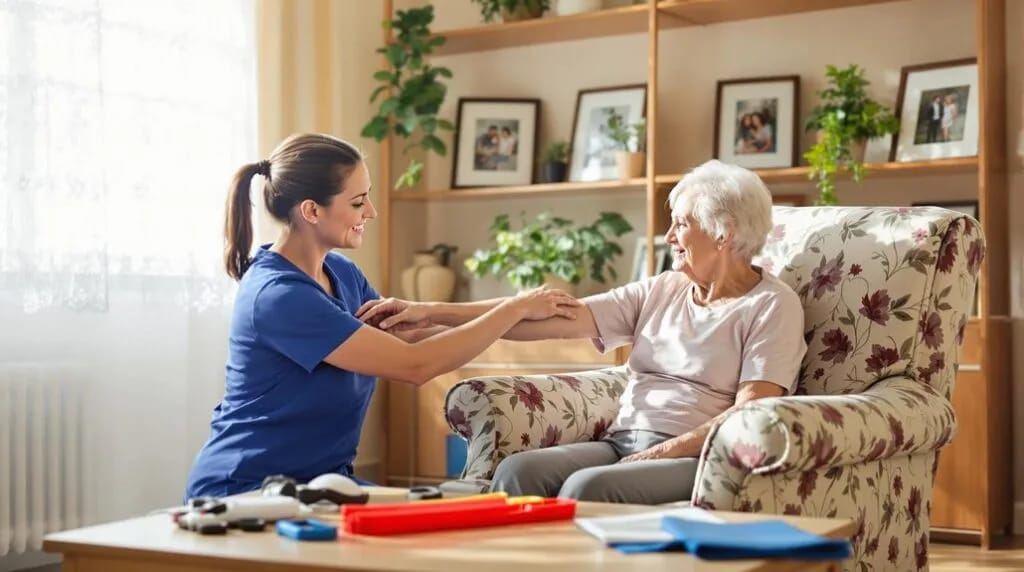
For many stroke survivors, the months that follow discharge are when they are trying to regain strength, improve walking, use an affected arm, become more independent, and return to everyday activities. Yet access to regular rehabilitation can be difficult.
Distance, transportation, cost, mobility limitations, caregiver availability, and the need for frequent appointments can all become barriers.
This is one reason telerehabilitation after stroke has attracted increasing attention.
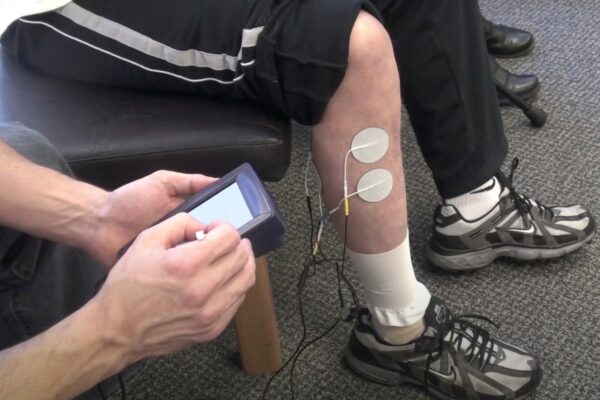
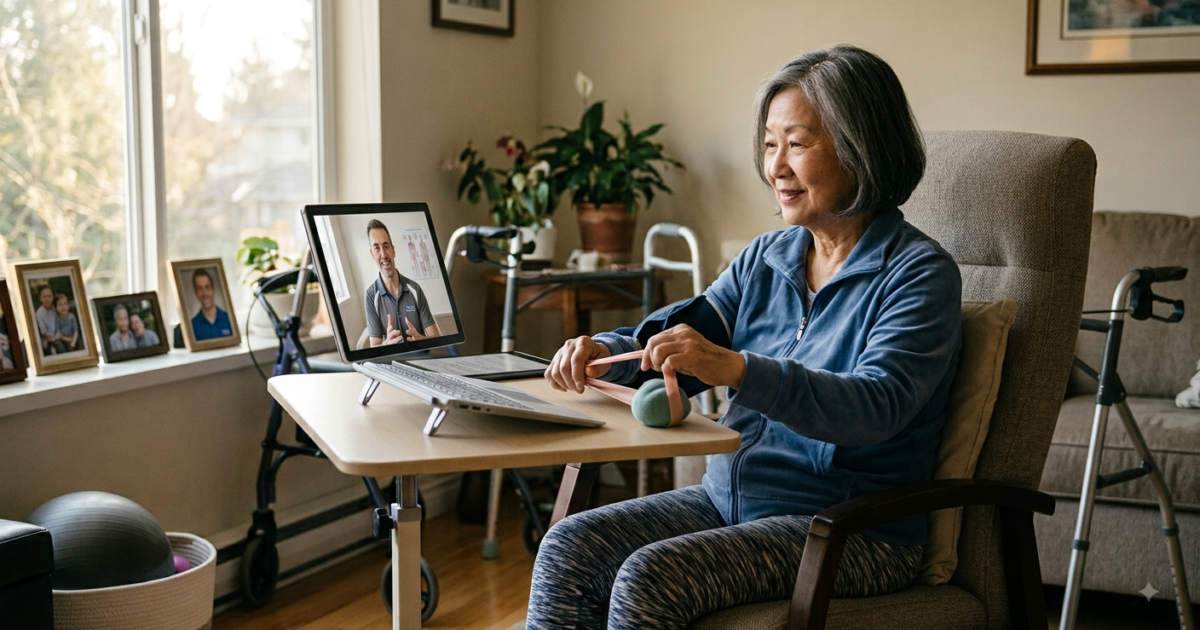
Telerehabilitation uses communication technology to allow a therapist and patient to interact remotely. Depending on the programme, this may involve live video sessions, exercise programmes delivered through smartphones or tablets, remote monitoring, digital feedback, virtual reality or a combination of these approaches.
But an important question remains:
Does telerehabilitation actually work?
The answer from recent evidence is encouraging—but more nuanced than simply saying that online therapy is “better” or “the same” as conventional rehabilitation.
The 2024 VA/DoD Clinical Practice Guideline for stroke rehabilitation suggests that clinicians may use either face-to-face therapy or telerehabilitation depending on the patient’s characteristics and preferences. The guideline found evidence suggesting telerehabilitation can be at least equivalent to in-person rehabilitation for several motor and functional outcomes.
At the same time, systematic reviews have reported mixed results depending on the outcome being measured, the technology used, and the type of rehabilitation programme.
So what does the evidence actually tell us?
What is telerehabilitation after stroke?
Telerehabilitation is the delivery of rehabilitation services using telecommunications and digital technologies.
Instead of travelling to a clinic for every session, a patient may receive some components of rehabilitation at home while communicating with a physiotherapist or other healthcare professional remotely.
A programme might include:
- Live video consultations
- Exercise demonstrations
- Individualized home exercise programmes
- Remote supervision
- Progress monitoring
- Smartphone or tablet applications
- Video-based exercise instructions
- Wearable sensors
- Virtual reality
- Digital feedback
- Education for patients and caregivers
The important point is that telerehabilitation is not one specific treatment.
It is a method of delivering rehabilitation.
The actual therapeutic intervention still matters.
Why is telerehabilitation becoming important in stroke recovery?
Stroke survivors may require rehabilitation for weeks, months, or even years.
However, attending frequent face-to-face appointments can be difficult, particularly for people who:
- Have significant mobility limitations
- Depend on family members for transportation
- Live far from rehabilitation centres
- Have difficulty using public transport
- Have limited access to specialist rehabilitation services
- Need continued therapy after formal outpatient rehabilitation ends
Telerehabilitation may help bring part of rehabilitation into the patient’s home environment.
This is particularly relevant in areas where specialist neurological rehabilitation services are concentrated in major cities.
For a patient in Karachi, for example, remote rehabilitation may potentially reduce the burden of repeated travel while allowing continued communication with a physiotherapist.
However, accessibility should not be confused with effectiveness.
A programme must still provide appropriate assessment, treatment, monitoring and progression.
What does the latest evidence show?
The evidence has grown substantially over the past several years.
A 2024 systematic review and meta-analysis of randomized controlled trials included 10 studies involving 417 people after stroke. The authors examined outcomes including activities of daily living, balance, mobility and motor control. Their findings suggested that effects varied between outcomes, with modest effects on some measures and no clear superiority across all outcomes.
A larger 2024 umbrella review brought together 28 systematic reviews covering 245 primary studies. Motor function, activities of daily living and balance were among the most frequently studied outcomes. The review found moderate- to high-quality evidence indicating either significant effects or no significant differences between telerehabilitation and comparator interventions for several primary outcomes—but also emphasized substantial heterogeneity across studies.
This is an important finding.
The research does not suggest that one universal telerehabilitation programme works for every stroke survivor.
Instead, the evidence suggests that appropriately designed telerehabilitation can be an effective component of stroke rehabilitation for selected patients.
Can telerehabilitation improve arm and hand function?
Upper-limb impairment is one of the most common problems after stroke.
Patients may have difficulty:
- Reaching
- Grasping
- Releasing objects
- Using both hands together
- Dressing
- Eating
- Writing
- Performing household tasks
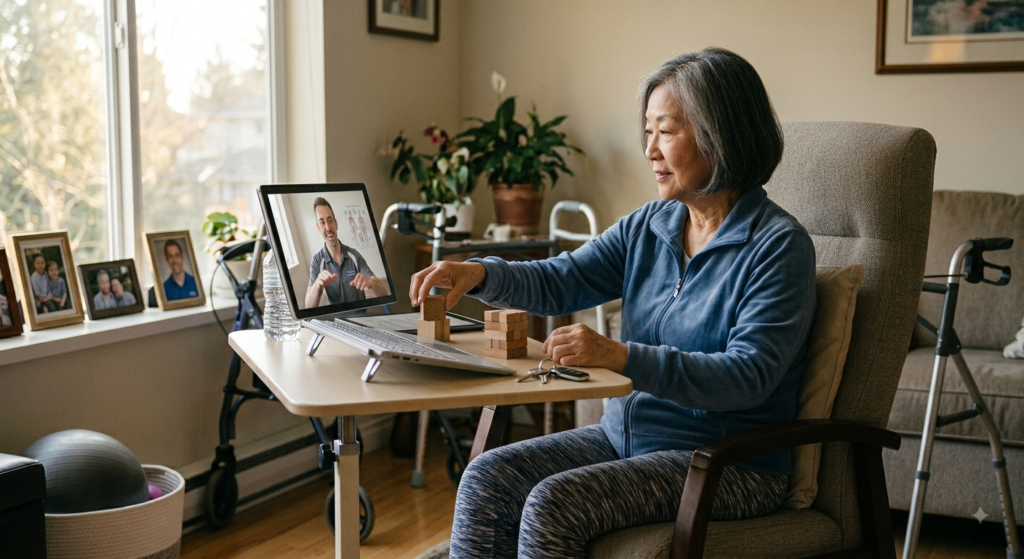
Telerehabilitation can provide opportunities for repeated task practice at home.
This is particularly interesting because neurological rehabilitation often depends on repetition and task-specific practice.
A patient may be guided through repeated reaching, grasping, or functional movements while the therapist monitors technique and progresses the programme.
Research comparing telerehabilitation with conventional rehabilitation has generally found that remote programmes can produce comparable outcomes across several motor functions, although the quality and consistency of the evidence vary. The 2024 VA/DoD guideline concluded that telerehabilitation appeared at least equivalent to in-person rehabilitation for motor outcomes overall.
However, the therapist still needs to determine whether the patient can perform the exercises safely and correctly without direct physical assistance.
What about walking and balance?
Walking and balance are major rehabilitation goals for many stroke survivors.
A systematic review and meta-analysis involving 14 studies and 594 stroke patients found small statistically significant effects of telerehabilitation on both balance and functional mobility, although the researchers rated the quality of evidence as low.
This is promising, but it needs to be interpreted carefully.
A remote programme may be appropriate for someone who can safely stand and walk independently or with an appropriate level of support.
It may be much less appropriate for someone who:
- Has severe balance impairment
- Frequently falls
- Requires substantial physical assistance
- Cannot safely transfer
- Has unpredictable neurological symptoms
In these situations, direct assessment and hands-on assistance may be essential.
Can telerehabilitation improve activities of daily living?
Activities of daily living—or ADLs—include tasks such as:
- Dressing
- Eating
- Bathing
- Toileting
- Moving around the home
- Household activities
A systematic review and meta-analysis of 14 randomized studies involving 1,367 participants found that telehealth interventions improved stroke survivors’ ability to perform activities of daily living, although the same analysis did not find a significant overall effect on balance.
The 2024 VA/DoD guideline also reported evidence suggesting telerehabilitation can be at least equivalent to usual care for independence in ADLs.
This is clinically meaningful because the ultimate goal of stroke rehabilitation is not simply improving a score on a clinical test.
It is helping the person function in real life.
Is telerehabilitation as effective as face-to-face physiotherapy?
This is probably the most important question patients ask.
The current answer is:
It can be—but not necessarily for everyone or for every rehabilitation goal.
The 2024 VA/DoD guideline specifically suggests either face-to-face therapy or telerehabilitation depending on patient characteristics and preferences. Its evidence review found telerehabilitation to be at least equivalent to in-person rehabilitation for several motor outcomes.
A systematic review comparing telerehabilitation with face-to-face rehabilitation also examined functional outcomes, adherence and satisfaction, demonstrating growing evidence for remote delivery after stroke.
But there are important limitations.
Telerehabilitation cannot completely reproduce everything that happens during an in-person assessment.
A physiotherapist physically present with a patient can:
- Assess movement through hands-on examination
- Provide physical assistance
- Guard a patient during balance tasks
- Modify movement manually
- Assess certain physical impairments more directly
- Respond immediately if the patient becomes unsafe
Therefore, the question should not be:
“Is telerehabilitation better than in-person physiotherapy?”
A more clinically useful question is:
“Which method of rehabilitation is most appropriate for this patient, at this stage of recovery, for this particular goal?”
Who is most likely to benefit from telerehabilitation?
Telerehabilitation may be particularly useful for stroke survivors who:
- Are medically stable
- Can participate safely at home
- Have adequate cognitive and communication abilities for the chosen format
- Have sufficient technological support
- Can follow instructions
- Have a safe home environment
- Have appropriate caregiver support when necessary
- Require ongoing exercise and functional training
The patient’s preferences also matter.
The 2024 VA/DoD guideline specifically recommends considering factors such as technological literacy, caregiver support, devices, and internet bandwidth when deciding whether telerehabilitation is appropriate.
This makes telerehabilitation a patient-selection issue, not simply a technology issue.
What are the limitations of telerehabilitation?
Despite its potential, telerehabilitation is not perfect.
1. Technology can become a barrier
A patient may have:
- Poor internet connectivity
- An unsuitable smartphone
- Limited digital literacy
- Difficulty operating applications
- Poor video quality
These problems can interfere with therapy.
2. Safety can be more difficult to assess remotely
A therapist may not be able to physically intervene if a patient loses balance.
This is particularly important during standing, transfers, and walking exercises.
3. Some patients require hands-on treatment
Certain impairments may require direct physical assessment or assistance.
4. Caregiver involvement may be necessary
Some patients may need another person nearby during sessions.
5. Not every rehabilitation domain has enough evidence
The VA/DoD guideline found insufficient evidence to recommend for or against telerehabilitation specifically for improving stroke-related dysphagia or aphasia outcomes.
This is an important distinction.
We should not take evidence from motor rehabilitation and automatically assume it applies equally to every other area of stroke recovery.
Can virtual reality make telerehabilitation more effective?
This is one of the more interesting developments in neurological rehabilitation.
Virtual reality (VR) can create interactive environments in which patients perform repetitive tasks while receiving visual or auditory feedback.
Instead of simply performing ten repetitions of a movement, a patient might interact with a virtual environment that turns the movement into a task or game.
A systematic review of VR-based telerehabilitation after stroke found outcomes comparable to conventional in-person rehabilitation for upper-extremity and balance function, with similar effects also reported for mobility, cognition, activities of daily living and quality of life.
However, VR should not automatically be considered superior.
Much of the research is still based on relatively small studies, different technologies and different treatment protocols.
The technology may be promising, but the rehabilitation principles remain more important than the technology itself.
What about wearable devices and remote monitoring?
Another emerging area is the use of wearable sensors and digital devices.
These technologies may potentially help therapists monitor:
- Number of repetitions
- Walking activity
- Movement patterns
- Exercise performance
- Daily physical activity
- Changes in mobility
This could eventually allow rehabilitation to become more continuous rather than being limited to the time spent in a therapy session.
However, many of these technologies are still being investigated.
More evidence is needed before sophisticated wearable or AI systems can be considered standard components of stroke rehabilitation.
What about artificial intelligence?
Artificial intelligence is beginning to appear in stroke rehabilitation research.
Potential applications include:
- Automated movement analysis
- Exercise feedback
- Personalized exercise progression
- Remote monitoring
- Prediction of rehabilitation outcomes
- Detection of movement abnormalities
This is an exciting area, but it is important not to confuse promising technology with established clinical evidence.
AI may eventually help therapists deliver more personalized rehabilitation at home, but it should complement—not replace—clinical reasoning and professional assessment.
Is telerehabilitation safe after stroke?
For appropriately selected patients, telerehabilitation appears to have a generally acceptable safety profile.
The 2024 VA/DoD evidence review reported that adverse events were infrequent and similar between telerehabilitation and control groups in the studies reviewed, with arm and shoulder pain among the more commonly reported events.
However, safety depends heavily on the patient’s condition and the exercises being prescribed.
A remote programme should take into account:
- Fall risk
- Cardiovascular status
- Cognitive function
- Communication ability
- Home environment
- Mobility level
- Need for caregiver assistance
A patient should never be given an exercise programme simply because it can be demonstrated over a video call.
The programme must first be clinically appropriate and safe.
Could telerehabilitation improve access to stroke rehabilitation in Pakistan?
This is particularly relevant in countries where specialist rehabilitation services may not be equally accessible to everyone.
For some patients in Pakistan, barriers may include:
- Long travel distances
- Transportation difficulties
- Limited neurological rehabilitation services outside major cities
- Financial constraints
- Dependence on family members for transportation
- Difficulty attending frequent appointments
Telerehabilitation could potentially help extend physiotherapy support beyond the clinic.
For example, a patient who has already undergone an initial assessment could receive supervised home exercise sessions, monitor progress, and communicate with a physiotherapist without travelling to the clinic for every appointment.
However, this should be implemented carefully.
Telerehabilitation should expand access—not lower the standard of care.
What might the future of stroke rehabilitation look like?
The future is unlikely to be entirely online or entirely in person.
A more realistic model may be hybrid rehabilitation.
A patient might begin with an in-person assessment.
The physiotherapist could then establish:
- Baseline function
- Mobility and balance
- Strength
- Upper-limb function
- Safety considerations
- Rehabilitation goals
After that, selected sessions could take place remotely.
The patient could complete exercises at home while the physiotherapist monitors progress and adjusts the programme.
Periodic in-person reassessment could then be used to evaluate progress and modify the rehabilitation plan.
This approach combines the advantages of both models.
What does the evidence actually tell us?
The most important conclusion from the current evidence is not that telerehabilitation has replaced conventional physiotherapy.
It hasn’t.
Instead, research increasingly supports telerehabilitation as a legitimate option within stroke rehabilitation for appropriately selected patients.
The 2024 VA/DoD guideline suggests that either face-to-face therapy or telerehabilitation may be appropriate depending on patient characteristics and preferences.
An umbrella review of 28 systematic reviews found moderate- to high-quality evidence for either significant effects or no significant differences between telerehabilitation and other interventions across several primary outcomes, while also highlighting substantial variation between studies.
At the same time, some recent meta-analyses have found only modest effects for particular outcomes and low-quality evidence in certain areas.
So the evidence is promising, but not a reason for blanket recommendations.
Telerehabilitation at Aspire Wellness, Karachi
At Aspire Wellness, telerehabilitation after stroke can be considered as part of an individualized rehabilitation plan when remote therapy is clinically appropriate.
The priority should be understanding the patient’s:
- Neurological impairments
- Mobility
- Balance
- Functional limitations
- Upper-limb function
- Communication and cognitive abilities
- Home environment
- Rehabilitation goals
Based on this assessment, a physiotherapist can determine whether remote sessions, face-to-face treatment or a combination of both would be most appropriate.
For some patients, telerehabilitation may provide a practical way to continue structured exercise and functional training at home.
For others, particularly those requiring substantial physical assistance or close safety monitoring, in-person rehabilitation may remain more appropriate.
The goal is not to replace clinical care with technology.
The goal is to use technology when it can make rehabilitation more accessible, practical, and meaningful for the patient.
Frequently Asked Questions
Can stroke rehabilitation be done completely online?
Not always. Some patients may be suitable for primarily remote rehabilitation, while others require face-to-face assessment or physical assistance. A hybrid model may be appropriate.
Is telerehabilitation as effective as conventional physiotherapy?
For some outcomes and appropriately selected patients, evidence suggests that telerehabilitation can produce outcomes comparable to conventional rehabilitation. However, results vary between programmes and patients.
Can telerehabilitation improve walking after stroke?
It may. Research has found small improvements in functional mobility and balance, although the quality of evidence varies.
Can it help improve arm function?
Yes, telerehabilitation programmes can support upper-limb rehabilitation and repetitive task practice. Evidence suggests outcomes can be comparable with in-person therapy in some settings.
Is telerehabilitation suitable for someone who has frequent falls?
Not necessarily. A patient with significant fall risk may require direct assessment and physical assistance. Suitability should be determined by a qualified clinician.
Can a caregiver participate?
Yes. Caregiver involvement can be particularly useful when a patient needs assistance with technology, exercises, or safety. The VA/DoD guideline specifically identifies caregiver support as a factor to consider when implementing telerehabilitation.
Is virtual reality necessary for telerehabilitation?
No. Telerehabilitation can be delivered through relatively simple technologies such as video communication and exercise programmes. VR is an emerging option, not a requirement.
Does telerehabilitation work for aphasia or swallowing problems after stroke?
The evidence is less certain. The 2024 VA/DoD guideline found insufficient evidence to recommend for or against telerehabilitation and technology-based interventions specifically for stroke-related dysphagia or aphasia.
The Takeaway
Telerehabilitation is becoming an increasingly important part of modern stroke rehabilitation.
The newest evidence does not suggest that every stroke survivor should replace conventional physiotherapy with online treatment.
Instead, it suggests something more useful:
For appropriately selected patients, telerehabilitation can be an effective way of delivering rehabilitation while reducing some of the practical barriers associated with frequent clinic visits.
It may support improvements in areas such as mobility, balance, motor function and activities of daily living, while emerging technologies such as virtual reality, wearable sensors and AI may expand what can be monitored and delivered remotely.
But technology is not the treatment.
The therapist’s clinical reasoning, the patient’s goals, the rehabilitation dose, safety and appropriate progression remain at the centre of stroke recovery.
The future of stroke rehabilitation may therefore not be telerehabilitation versus conventional rehabilitation.
It may be better rehabilitation through a combination of both.
References
- VA/DoD. Clinical Practice Guideline for Management of Stroke Rehabilitation. 2024.
- Pitliya A, et al. Telerehabilitation in post-stroke care: a systematic review and meta-analysis of randomized controlled trials. 2024.
- Alayat MS, et al. The Effectiveness of Telerehabilitation on Balance and Functional Mobility in Patients with Stroke: A Systematic Review and Meta-Analysis.
- Telerehabilitation and Its Impact Following Stroke: An Umbrella Review of Systematic Reviews. 2024/2025.
- Effects of telehealth interventions on performing activities of daily living and maintaining balance in stroke survivors: a systematic review and meta-analysis of randomized controlled studies.
- Effects of virtual reality-based telerehabilitation for stroke patients: a systematic review and meta-analysis of randomized controlled trials.
- Telerehabilitation service impact on physical function and adherence compared to face-to-face rehabilitation in patients with stroke: a systematic review and meta-analysis.