
Most paddle tennis players believe injuries only happen after a big fall or a dangerous accident. But here’s the truth: 90% of paddle tennis injuries happen slowly and silently—through overuse, poor technique, muscle imbalance, and lack of proper warm-ups.
That’s exactly why getting the right paddle tennis injury treatment in Karachi is essential before the pain becomes chronic and stops you from enjoying the game.
Whether you play at PPL courts, local clubs, or private indoor arenas, this guide will show you exactly how to identify, treat, and prevent the most common paddle-related injuries with expert physiotherapy.
⭐ What Is Paddle Tennis & Why Are Injuries Common?
Paddle tennis is a fast-paced sport that combines tennis, squash, and badminton-style movements.
Players use quick directional changes, overhead smashes, repetitive swings, and explosive footwork — which puts high stress on joints, tendons, and stabilizing muscles.
Why injuries happen frequently in paddle tennis:
-
Poor technique or improper paddle grip
-
Weak rotator cuff, core, or leg muscles
-
Insufficient warm-ups before playing
-
Overuse from playing too often without recovery
-
Sudden direction changes causing sprains and strains
Because the sport requires both power and precision, players who don’t condition their bodies properly end up with recurring pain — especially shoulder injuries, elbow pain, ankle sprains, and lower-back strain.
⭐ Common Paddle Tennis Injuries & Their Symptoms
Understanding your injury early is the first step toward finding the best paddle tennis injury treatment in Karachi.
Here are the most frequent injuries paddle players face:
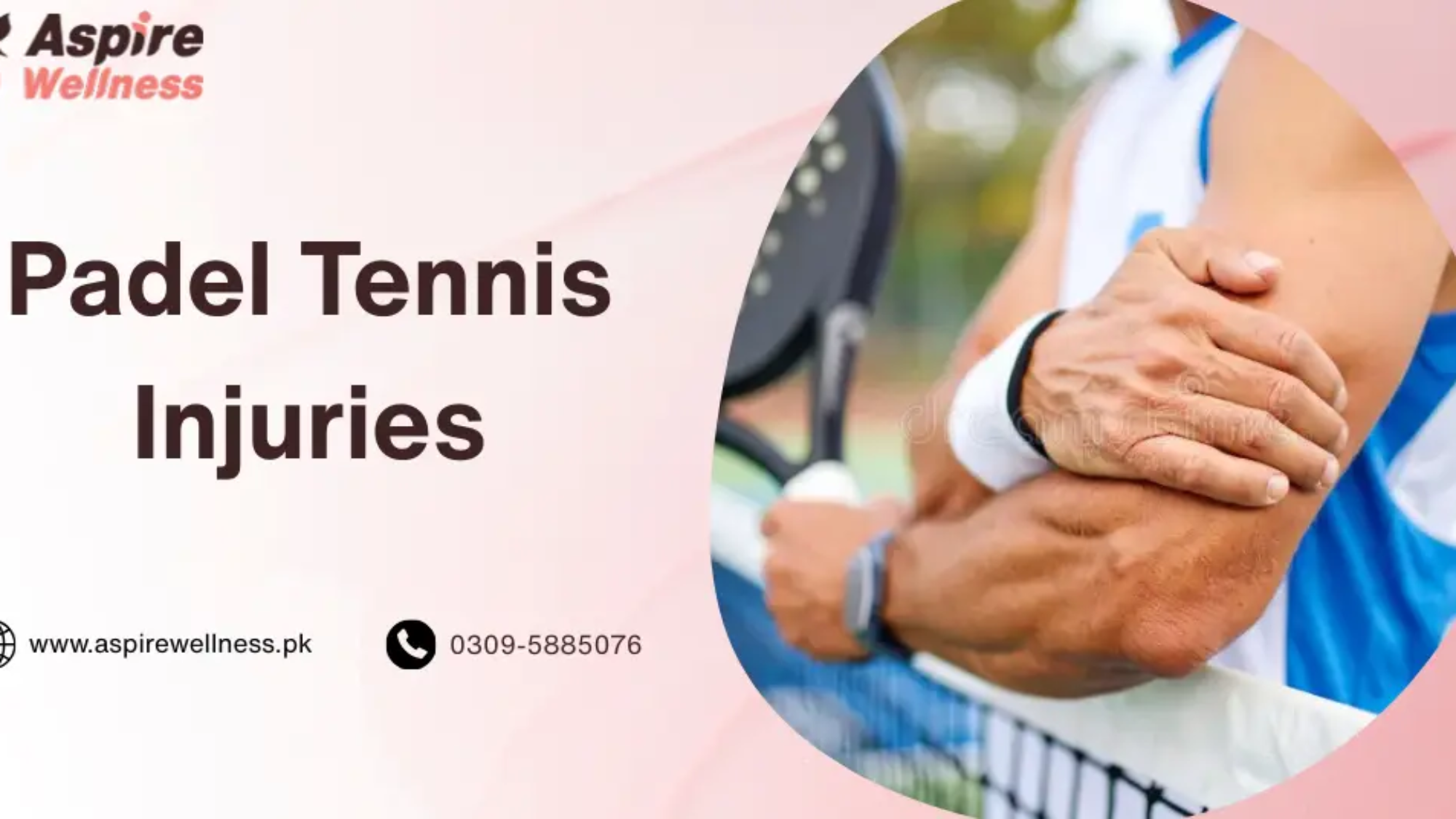
1. Paddle Tennis Elbow (Similar to Tennis Elbow)
What it is: Inflammation of forearm tendons due to repetitive paddle swings.
Symptoms:
-
Pain on the outer elbow
-
Weak grip strength
-
Pain during backhand strokes
-
Difficulty holding objects
Why it happens: Tight grip, improper wrist control, and repetitive strokes.
2. Shoulder Impingement & Rotator Cuff Strain
What it is: Overuse of shoulder tendons from overhead smashes and improper mechanics.
Symptoms:
-
Pain when lifting the arm
-
Clicking sounds
-
Weak overhead shots
-
Reduced shoulder mobility
This is one of the top paddle injuries treated by physiotherapists in Karachi.
3. Knee Pain (Patellar Tendonitis / Meniscus Stress)
What it is: Knee joint stress from fast stops, lunges, and jumping.
Symptoms:
-
Pain around the kneecap
-
Stiffness after playing
-
Swelling after intense matches
-
Difficulty squatting
4. Ankle Sprains & Instability
What it is: Twisting or rolling of the ankle during quick lateral movements.
Symptoms:
-
Swelling
-
Bruising
-
Pain when walking
-
Feeling of instability
Untreated sprains often lead to chronic ankle instability.
5. Lower Back Strain
What it is: Muscle or joint overload from twisting, bending, and smashes.
Symptoms:
-
Tightness in the lower back
-
Pain with twisting
-
Morning stiffness
-
Trouble bending forward
Lower-back pain is extremely common among paddle players in Karachi who lack proper core strength.
⭐ Best Paddle Tennis Injury Treatment in Karachi (Step-by-Step)
If you’re searching for paddle tennis injury treatment Karachi, here’s what a proper management plan looks like:
1. Hands-On Physiotherapy
This includes:
-
Deep tissue release
-
Trigger point therapy
-
Joint mobilization
-
Stretching tight muscles
This helps reduce pain, improve mobility, and correct muscle imbalances.
2. Strengthening & Conditioning Exercises
Your physiotherapist will design sport-specific exercises focusing on:
-
Shoulder rotator cuff
-
Forearm extensor muscles
-
Core and lower-back muscles
-
Glutes, quadriceps, calves
-
Ankle stabilizers
Strengthening prevents future injuries and improves your paddle performance.
3. Dry Needling / Myofascial Release
Used for:
-
Rotator cuff strain
-
Paddle tennis elbow
-
Back pain
-
Hip tightness
This accelerates recovery by reducing muscle spasms and improving blood flow.
4. Electrotherapy & Pain Relief Techniques
Including:
-
Ultrasound
-
TENS
-
Shockwave therapy (for chronic elbow/knee pain)
These help control pain, reduce swelling, and support healing.
5. Sports Taping & Bracing
Used to support:
-
Ankles
-
Knees
-
Elbows
-
Shoulders
Perfect during matches to prevent re-injury.
⭐ Prevention Tips for Paddle Tennis Players
Do these before every match:
✔ Dynamic warm-up (5 minutes)
✔ Shoulder activation drills
✔ Forearm mobility stretches
✔ Light jogging + side shuffles
✔ Ankle and knee stability exercises
Do these after playing:
✔ Gentle stretching
✔ Ice painful areas
✔ Hydrate properly
✔ Rest 24–48 hours after intense sessions
Bonus Tips:
-
Use the correct paddle grip size
-
Wear good court shoes
-
Don’t overtrain
-
Strengthen your core, hips, and shoulders
⭐ When to See a Physiotherapist in Karachi
You need professional paddle injury treatment if you experience:
-
Pain lasting more than 48 hours
-
Swelling or stiffness that worsens
-
Pain during paddle strokes
-
Sharp pain during movement
-
Recurring ankle or shoulder issues
Early treatment prevents long-term damage and gets you back on the court faster.
⭐ Why Choose a Sports Physiotherapist in Karachi?
A general physiotherapist may help you with basic pain relief —
BUT a sports physio understands:
🎾 paddle biomechanics
🎾 movement patterns
🎾 injury risks
🎾 optimal strengthening programs
This ensures faster recovery, better performance, and fewer future injuries.
⭐ Final Thoughts
Paddle tennis is an amazing sport — but it demands proper technique, strength, and injury management.
If you’re dealing with elbow pain, shoulder tightness, knee discomfort, or back issues, don’t ignore them.
Finding the right paddle tennis injury treatment in Karachi can help you recover quickly and get back to playing confidently.
- Clinic Name: Aspire Wellness
- Address: DHA Phase 2 Ext Karachi
- Phone Number: 03095885076
- Website: https://aspirewellness.pk
- Google Maps URL: https://maps.app.goo.gl/QF5LJZUkJTRgnR2TA
Leave Your Comment